

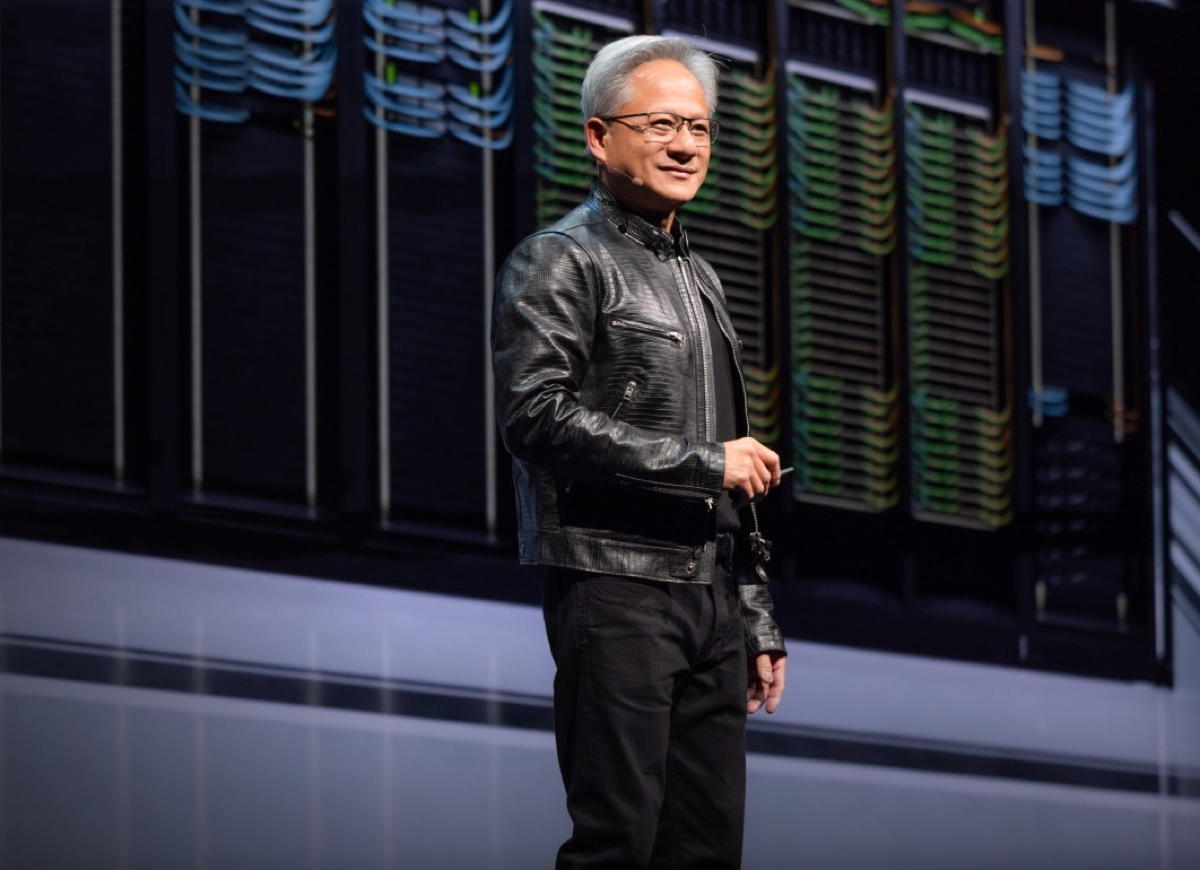
Nvidia chief executive Jensen Huang said the company will “probably” not invest $100 billion (£75bn) in OpenAI, following a much smaller $30bn investment as part of a funding round last week, giving the reason as the AI start-up’s likely IPO sometime this year.
“I think the opportunity to invest $100 billion in OpenAI is probably not in the cards,” Huang said at a Morgan Stanley conference. Because of the expected IPO, “this might be the last time we’ll have the opportunity to invest in a consequential company like this,” Huang added.
He also said Nvidia’s recent $10bn investment in Anthropic was probably “the last” in that company due to Anthropic’s expected IPO. The comments come after months of speculation around the relationship between Nvidia and OpenAI, the two most prominent leaders in the generative AI boom that has swept the world.
The Background of Nvidia and OpenAI
Nvidia and OpenAI have been closely intertwined since the early days of the AI revolution. OpenAI, founded in 2015 as a non-profit, later transitioned to a capped-profit model and has relied heavily on Nvidia’s graphics processing units (GPUs) to train its large language models, including GPT-3 and GPT-4. Nvidia’s chips, originally designed for gaming, proved exceptionally efficient for the parallel processing required by neural networks.
In September, Nvidia said it would invest up to $100bn into OpenAI over several years, with the rounds tied to the start-up’s successive deployments of Nvidia’s chips in data centres. But the companies provided few details, and the agreement was never finalised. By January, the deal had reportedly stalled.
The $30bn investment that did go through is a fraction of that initial ambition, but still represents one of the largest private investments in AI. Huang’s remarks suggest that Nvidia sees OpenAI’s IPO as an exit point, rather than continuing to pour billions into a company that will soon be publicly traded.
The Changing Economics of AI
Meanwhile, the economics of the AI boom have changed dramatically over the past year. Last year’s optimistic announcements about multibillion-dollar investments have given way to the realities of building and operating massive data centres required to power advanced AI models. Such facilities consume enormous amounts of electricity, water, and other natural resources.
A single large data centre can use as much electricity as a small city, and the water used for cooling can strain local supplies. This has led to growing backlash from communities and environmental groups. In some regions, data centre construction has been halted or delayed due to local opposition.
Nvidia, as the dominant supplier of AI chips, is directly affected by these dynamics. The company’s revenue has soared, but so has scrutiny of its environmental footprint. Huang has acknowledged these concerns, but maintains that AI can also help solve environmental problems by optimising energy grids and accelerating scientific research.
IPO Trends and the AI Market
The AI sector is seeing a wave of IPOs, with companies like Anthropic and OpenAI expected to go public within the next few years. Other AI startups, such as Cohere, AI21 Labs, and Stability AI, are also rumoured to be considering public listings. The market’s appetite for AI stocks remains strong, but valuations have become increasingly frothy.
OpenAI, valued at around $80bn after its latest funding round, is one of the most valuable private companies in the world. An IPO could raise tens of billions of dollars, giving it more resources to compete with rivals like Google DeepMind and Meta. However, going public also brings greater regulatory scrutiny and pressure to deliver quarterly profits.
Nvidia’s decision to limit its investment to $30bn, rather than the mooted $100bn, may reflect a prudent assessment of risk. Huang is known for his long-term vision, but also for being pragmatic about market conditions. The company has already profited enormously from selling chips to OpenAI and other AI firms, and does not need to tie its fate to a single customer.
Nvidia’s Broader Strategy
Nvidia’s investment strategy extends beyond OpenAI. The company has also invested in Anthropic, Cohere, and several other AI startups, often taking equity stakes in exchange for access to its latest hardware. This approach gives Nvidia insight into the needs of AI developers and helps ensure that its chips remain the platform of choice.
Huang’s comments about Anthropic suggest a similar pattern: invest early, then let the startup go public. Nvidia’s $10bn investment in Anthropic was announced as part of a multi-year agreement to supply GPUs. But Huang said that too was likely a one-time opportunity before the company’s IPO.
Some analysts believe that Nvidia’s investments are also a way to hedge against the possibility that AI companies develop their own chips. OpenAI, for instance, has considered designing custom processors to reduce its reliance on Nvidia. By remaining a key investor and partner, Nvidia can influence that process and maintain its position in the ecosystem.
In the long run, the relationship between Nvidia and OpenAI will evolve. Both companies are racing to dominate the next wave of AI, but their paths may diverge. OpenAI wants to build artificial general intelligence (AGI) that can outperform humans at most tasks, while Nvidia wants to sell the hardware that makes that possible.
The AI boom has already created immense wealth for investors, but it has also raised questions about sustainability, ethics, and market concentration. Huang’s cautious stance on the $100bn investment may be a sign that even the most enthusiastic backers recognise the limits of exponential growth.
Source: Silicon UK News